
Tribes and cultures are the best ways to depict diversity and community co-existence, however, history has shown that when identity is manipulated for political gain, fear, or hatred, it can become a line that separates communities instead of bringing them together. Kigali Genocide Memorial is one stark reminder of brother turning against brother to an extremely brutal outcome.
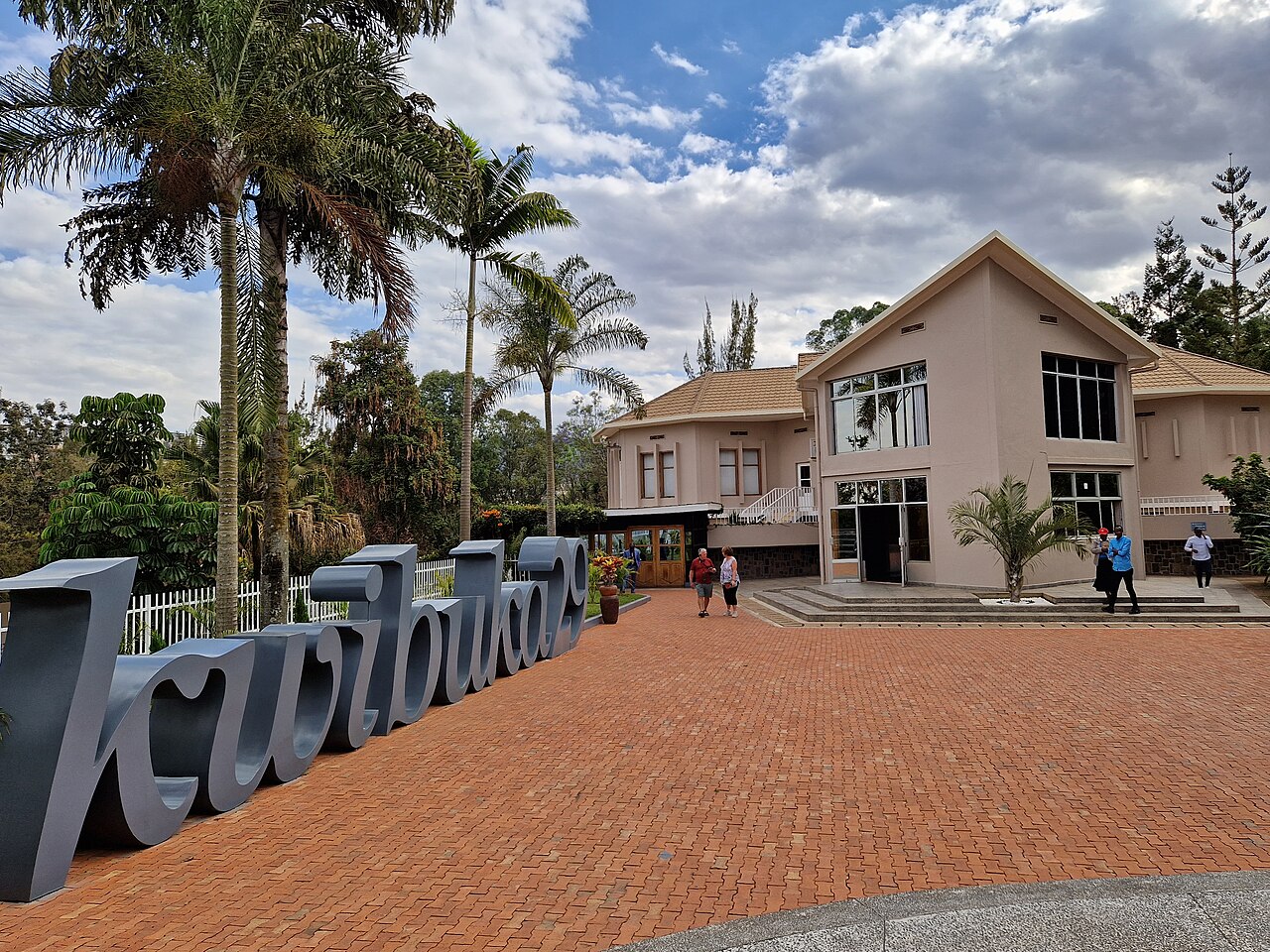
The road to the Kigali Genocide Memorial winds gently through one of Africa's cleanest and most orderly capitals. Kigali is a city of green hills, flowering trees and surprisingly quiet streets. Motorcycles weave through traffic with practiced precision, roadside cafés fill with conversations over coffee, and children in neatly pressed uniforms walk home from school beneath a warm equatorial sun. At first glance, it feels like a city looking confidently toward the future.
Yet beneath one of those hills lies a reminder that the future can only be built by remembering the past.
The memorial does not announce itself with towering monuments or dramatic architecture. It sits with quiet dignity in Gisozi, its gardens carefully tended, its walkways lined with flowers that soften the weight of what visitors have come to confront. There is no need for spectacle here. The story it preserves is powerful enough on its own.
I noticed something almost immediately after stepping inside the grounds. People lowered their voices without being asked. Some stood reading the names etched into memorial walls. Others placed flowers beside mass graves where more than 250,000 victims are buried. A few simply sat on benches overlooking the gardens, saying nothing at all. It wasn't an uncomfortable silence. It was the kind reserved for places where words often feel inadequate.
Every visitor arrives carrying a different understanding of Rwanda.
Some come because they know the history. Others because they have only heard fragments of it. Many are travellers seeking to understand a country that has become known for its remarkable recovery as much as for one of the darkest episodes of the twentieth century. Regardless of why they come, they leave carrying something they did not bring with them.
That became clear to me as I entered the first exhibition.
The photographs begin innocently enough—family portraits, school pictures, wedding celebrations, ordinary moments frozen in time. Looking at them, it becomes impossible to think of the victims as an abstract figure often repeated in history books. They were teachers, mechanics, nurses, musicians, students and farmers. They laughed at family gatherings, worried about examinations, argued over dinner tables and imagined futures that would never arrive.
Numbers have a strange way of distancing us from tragedy. Eight hundred thousand is a figure that can be read in a sentence and forgotten by the next paragraph. A single photograph of a smiling child, however, lingers long after the statistics have faded.
As I moved through the galleries, Rwanda's story unfolded gradually rather than dramatically. The exhibitions resist reducing the genocide to a single event or a single cause. Instead, they reveal how decades of political decisions, colonial legacies, discrimination and sustained propaganda slowly reshaped identities that had long existed alongside one another. The lesson is unsettling precisely because it is so ordinary. Societies rarely collapse overnight. The conditions that make mass violence possible are often built piece by piece, through language that dehumanizes, institutions that exclude, and leaders who persuade ordinary people to fear their neighbours.
The genocide against the Tutsi in 1994 did not begin with machetes. It began much earlier—with ideas.
For decades, colonial administrations reinforced ethnic classifications that became increasingly rigid, creating divisions that later political leaders exploited. Following independence, cycles of discrimination and violence deepened mistrust. By the early 1990s, extremist factions had developed a campaign that relied not only on weapons but on words. Radio broadcasts spread hatred. Newspapers repeated conspiracy theories. Political speeches portrayed fellow citizens as enemies rather than neighbours.
When the plane carrying President Juvénal Habyarimana was shot down on 6 April 1994, those preparations erupted into one of the fastest and most devastating episodes of mass killing in modern history. Over roughly one hundred days, an estimated 800,000 people—primarily Tutsi, along with many Hutu who opposed the killings or refused to participate—were murdered.
The memorial recounts these events with restraint. It does not seek to overwhelm visitors with graphic imagery. Instead, it relies on testimony, documents, photographs and personal stories to explain how such violence became possible. That choice makes the experience more powerful. It asks visitors not merely to witness suffering, but to understand how it unfolded.
History also records the roles of individuals who helped fuel the machinery of genocide. Politicians, military leaders, broadcasters and financiers all became subjects of investigation by international and Rwandan courts. Among the most well-known was Félicien Kabuga, a wealthy businessman who was indicted by the United Nations tribunal on charges including genocide and direct and public incitement to commit genocide. Prosecutors alleged that he financed extremist media and militia activities. After evading arrest for more than two decades, he was apprehended in France in 2020. Proceedings against him were later suspended after judges found him medically unfit to stand trial, and he died before any verdict was reached. His case illustrates both the international effort to pursue accountability and the importance of distinguishing allegations from judicial findings.
Yet the memorial never suggests that one individual alone could explain such a tragedy. Genocide requires systems, institutions and many decisions made by many people. It also requires the silence of those who look away.
Walking through the children's memorial was perhaps the most difficult part of the visit.
There are no sweeping historical narratives here. Instead, there are names, photographs and fragments of ordinary lives: favourite foods, beloved games, treasured toys and dreams of becoming doctors, teachers or pilots. These details transform history into something profoundly personal. The loss is measured not only in lives ended but in futures erased.
Outside again, the gardens seemed different.
The same flowers bloomed. Birds continued their songs. Visitors moved quietly along shaded paths.
Life, I realized, has a remarkable capacity to return to places where unimaginable suffering once occurred.
Perhaps that is what makes the Kigali Genocide Memorial so important today. It does not exist to keep Rwanda imprisoned by its past. It exists to ensure that memory becomes part of the country's future. It preserves evidence against denial, honours those who were lost, supports survivors, and teaches each new generation that peace cannot survive without truth, justice and a shared commitment to protecting one another.

Standing on the hillside overlooking Kigali, I found myself thinking less about Rwanda than about the rest of the world.
From Europe to the Middle East, from Africa to Asia, and across many other regions, civilians continue to bear the consequences of armed conflict, political repression and violence. Every crisis has its own history, its own actors and its own complexities. Yet one lesson echoed from the memorial with unsettling clarity: when human beings are taught to see others as less deserving of dignity, violence becomes easier to justify.
The warning preserved here belongs to no single nation.
It belongs to all of us.
As I left the memorial, the city continued with its ordinary rhythm. Buses stopped to collect passengers. Street vendors greeted customers. Schoolchildren laughed as they crossed the road. Life, as it always does, moved forward.
Perhaps that is the memorial's greatest lesson.
History is not remembered so that we remain captive to it. It is remembered so that, when the first signs of hatred, division or dehumanization appear—whether in politics, the media or our own communities—we recognize them before they grow into something far more destructive.
The quiet hill in Kigali is more than a resting place for the dead. It is a conversation with the living, asking each visitor a question that cannot be answered inside the memorial's walls but only in the choices made after leaving them: what kind of world are we willing to build together?
Tribes and cultures are the best ways to depict diversity and community co-existence, however, history has shown that when identity is manipulated for political gain, fear, or hatred, it can become a line that separates communities instead of bringing them together. Kigali Genocide Memorial is one stark reminder of brother turning against brother to an extremely brutal outcome.
The road to the Kigali Genocide Memorial winds gently through one of Africa's cleanest and most orderly capitals. Kigali is a city of green hills, flowering trees and surprisingly quiet streets. Motorcycles weave through traffic with practiced precision, roadside cafés fill with conversations over coffee, and children in neatly pressed uniforms walk home from school beneath a warm equatorial sun. At first glance, it feels like a city looking confidently toward the future.
Yet beneath one of those hills lies a reminder that the future can only be built by remembering the past.
The memorial does not announce itself with towering monuments or dramatic architecture. It sits with quiet dignity in Gisozi, its gardens carefully tended, its walkways lined with flowers that soften the weight of what visitors have come to confront. There is no need for spectacle here. The story it preserves is powerful enough on its own.
I noticed something almost immediately after stepping inside the grounds. People lowered their voices without being asked. Some stood reading the names etched into memorial walls. Others placed flowers beside mass graves where more than 250,000 victims are buried. A few simply sat on benches overlooking the gardens, saying nothing at all. It wasn't an uncomfortable silence. It was the kind reserved for places where words often feel inadequate.
Every visitor arrives carrying a different understanding of Rwanda.
Some come because they know the history. Others because they have only heard fragments of it. Many are travellers seeking to understand a country that has become known for its remarkable recovery as much as for one of the darkest episodes of the twentieth century. Regardless of why they come, they leave carrying something they did not bring with them.
That became clear to me as I entered the first exhibition.
The photographs begin innocently enough—family portraits, school pictures, wedding celebrations, ordinary moments frozen in time. Looking at them, it becomes impossible to think of the victims as an abstract figure often repeated in history books. They were teachers, mechanics, nurses, musicians, students and farmers. They laughed at family gatherings, worried about examinations, argued over dinner tables and imagined futures that would never arrive.
Numbers have a strange way of distancing us from tragedy. Eight hundred thousand is a figure that can be read in a sentence and forgotten by the next paragraph. A single photograph of a smiling child, however, lingers long after the statistics have faded.
As I moved through the galleries, Rwanda's story unfolded gradually rather than dramatically. The exhibitions resist reducing the genocide to a single event or a single cause. Instead, they reveal how decades of political decisions, colonial legacies, discrimination and sustained propaganda slowly reshaped identities that had long existed alongside one another. The lesson is unsettling precisely because it is so ordinary. Societies rarely collapse overnight. The conditions that make mass violence possible are often built piece by piece, through language that dehumanizes, institutions that exclude, and leaders who persuade ordinary people to fear their neighbours.
The genocide against the Tutsi in 1994 did not begin with machetes. It began much earlier—with ideas.
For decades, colonial administrations reinforced ethnic classifications that became increasingly rigid, creating divisions that later political leaders exploited. Following independence, cycles of discrimination and violence deepened mistrust. By the early 1990s, extremist factions had developed a campaign that relied not only on weapons but on words. Radio broadcasts spread hatred. Newspapers repeated conspiracy theories. Political speeches portrayed fellow citizens as enemies rather than neighbours.
When the plane carrying President Juvénal Habyarimana was shot down on 6 April 1994, those preparations erupted into one of the fastest and most devastating episodes of mass killing in modern history. Over roughly one hundred days, an estimated 800,000 people—primarily Tutsi, along with many Hutu who opposed the killings or refused to participate—were murdered.
The memorial recounts these events with restraint. It does not seek to overwhelm visitors with graphic imagery. Instead, it relies on testimony, documents, photographs and personal stories to explain how such violence became possible. That choice makes the experience more powerful. It asks visitors not merely to witness suffering, but to understand how it unfolded.
History also records the roles of individuals who helped fuel the machinery of genocide. Politicians, military leaders, broadcasters and financiers all became subjects of investigation by international and Rwandan courts. Among the most well-known was Félicien Kabuga, a wealthy businessman who was indicted by the United Nations tribunal on charges including genocide and direct and public incitement to commit genocide. Prosecutors alleged that he financed extremist media and militia activities. After evading arrest for more than two decades, he was apprehended in France in 2020. Proceedings against him were later suspended after judges found him medically unfit to stand trial, and he died before any verdict was reached. His case illustrates both the international effort to pursue accountability and the importance of distinguishing allegations from judicial findings.
Yet the memorial never suggests that one individual alone could explain such a tragedy. Genocide requires systems, institutions and many decisions made by many people. It also requires the silence of those who look away.
Walking through the children's memorial was perhaps the most difficult part of the visit.
There are no sweeping historical narratives here. Instead, there are names, photographs and fragments of ordinary lives: favourite foods, beloved games, treasured toys and dreams of becoming doctors, teachers or pilots. These details transform history into something profoundly personal. The loss is measured not only in lives ended but in futures erased.
Outside again, the gardens seemed different.
The same flowers bloomed. Birds continued their songs. Visitors moved quietly along shaded paths.
Life, I realized, has a remarkable capacity to return to places where unimaginable suffering once occurred.
Perhaps that is what makes the Kigali Genocide Memorial so important today. It does not exist to keep Rwanda imprisoned by its past. It exists to ensure that memory becomes part of the country's future. It preserves evidence against denial, honours those who were lost, supports survivors, and teaches each new generation that peace cannot survive without truth, justice and a shared commitment to protecting one another.
Standing on the hillside overlooking Kigali, I found myself thinking less about Rwanda than about the rest of the world.
From Europe to the Middle East, from Africa to Asia, and across many other regions, civilians continue to bear the consequences of armed conflict, political repression and violence. Every crisis has its own history, its own actors and its own complexities. Yet one lesson echoed from the memorial with unsettling clarity: when human beings are taught to see others as less deserving of dignity, violence becomes easier to justify.
The warning preserved here belongs to no single nation.
It belongs to all of us.
As I left the memorial, the city continued with its ordinary rhythm. Buses stopped to collect passengers. Street vendors greeted customers. Schoolchildren laughed as they crossed the road. Life, as it always does, moved forward.
Perhaps that is the memorial's greatest lesson.
History is not remembered so that we remain captive to it. It is remembered so that, when the first signs of hatred, division or dehumanization appear—whether in politics, the media or our own communities—we recognize them before they grow into something far more destructive.
The quiet hill in Kigali is more than a resting place for the dead. It is a conversation with the living, asking each visitor a question that cannot be answered inside the memorial's walls but only in the choices made after leaving them: what kind of world are we willing to build together?
By Muoka Mutuku
July 5, 2026
Comments (0)
No comments yet. Be the first to comment!
Leave a Comment
Please log in to leave a comment.
Login to Comment Register